Posts

Peanut Stir Fry

Hey there! Stir frys are actually awesome, in case you didn’t know. They’re loaded with veg (one of my favourite things), have a delicious sauce (another one of my faves), and this one has peanut butter (my ALL TIME favourite thing). This stir fry is also pretty much fool-proof and can be served with any type of grain you’d like; rice, brown rice, quinoa, noodles, we’re making it work.

If you really need to, you can also switch out some of the veggies I used as well. Snap peas, red onion, and even cauliflower would work in here. And if you want to add in some cooked chicken or beans for protein then go ahead! What I’m saying is, this stir fry is really versatile and works with pretty much anything.

This sauce is OFF THE HOOK though. You’ve got creamy peanut butter, spicy sriracha, and a little salt from the soy sauce. So good. Enough talk. Let’s get to the stir fry.

Peanut Stir Fry

Serves: 1-2

Total Time: 30 minutes

Ingredients:

For the Stir Fry:

  • 1 tbsp olive oil
  • 1/2 a white onion, thinly sliced
  • 1 small red bell pepper, thinly sliced
  • 4 small mushrooms, sliced
  • 1/2 a head of broccoli, cut into small florets
  • 1 carrot, sliced
  • Green onion for topping (optional)

For the Sauce:

  • 1 tbsp creamy natural peanut butter
  • 1 tsp sesame oil
  • 1 tbsp rice vinegar
  • 1 tsp soy sauce
  • 1/2 tsp ground ginger
  • 1/2 tsp maple syrup
  • 1/2 tsp sriracha
  • Sprinkle of red chilli flakes
  • 2 tbsp water (or more if you want a thinner sauce)

Directions:

  1. Mix together all of the sauce ingredients in a small bowl and set aside.
  2. Heat the olive oil in a large pan over medium heat. Add in all of the sliced veggies and cook until they’re tender, about 8-10 minutes. Add water to the pan if it starts to dry out, and stir often to prevent burning.
  3. Once the veggies are soft, add the sauce and cook for another minute. Make sure that all of the vegetables are evenly coated.
  4. Remove the pan from the heat and serve the stir fry with noodles, quinoa, or by itself. Top with sliced green onion.

Enjoy this healthy and delicious meal idea! See you Wednesday;))

Yours Truly,

Olivia

How I Use My Bullet Journal

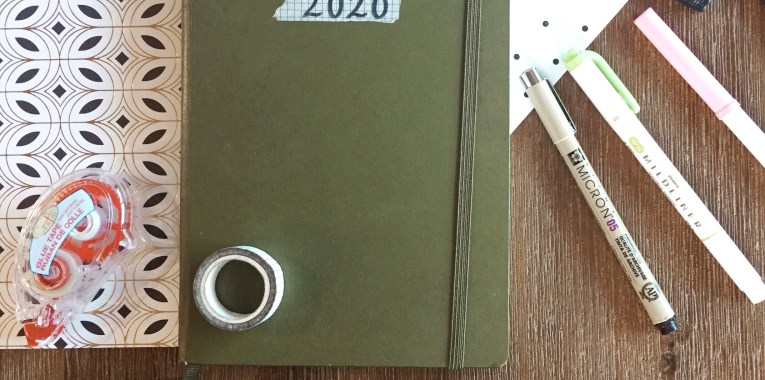
Hi there! I didn’t get around to posting this Wednesday, but today I have a great post that I’ve gotten a couple of requests for. If you’re looking to start a bullet journal or are just interested in the system, you’re in the right place.

This post is going to showcase all of the pages that I use most often in my journal, and explain how I use them. Bullet journaling really helps me to plan out my day and get stuff done. Also, I can track my habits, keep a gratitude log, and set goals. There are a lot of working parts in a bullet journal and I might not get to all of them today, but I’ll get into the most important pages that are essential. Well, I think they are, anyways. A bullet journal is super personal and can be used pretty much however you want. But I suggest that you start with the basics, and then once you get the hang of it you can start adding in all of the bells and whistles.

If you’re curious as to the supplies I use for journaling, you can check out my post on Bullet Journaling Supplies. Plus, here’s the link to my very first Bullet journal set-up, where I also explain the bullet journal system a little bit.

I’ll probably use examples from all three journals that I’ve done so far, so you can see the development in my writing style and layouts. There are honestly so many ways that you can set up any given page of your journal! That’s what I love most about having a bullet journal; it keeps me creative and forces me to try new things all of the time. Right now is the perfect time to start one, because we’ve all got so much time on our hands! Plus, having a journal can give you some semblance of routine, and my to do lists that I’ve been making have really helped me survive.

I want to start looking through my old bullet journal pictures so I’m going to keep this last part short. Remember to have fun with your journal and to EXPECT MISTAKES. I’ve made sooooo many mistakes over the years, and I’ve just had to deal with them. Sometimes they end up helping your design process. Don’t worry if your first journal attempts don’t look like some of the amazing spreads on Instagram or Pinterest either. Just stick with it and your journal will develop into something awesome! Let’s get into how I use my bullet journal.

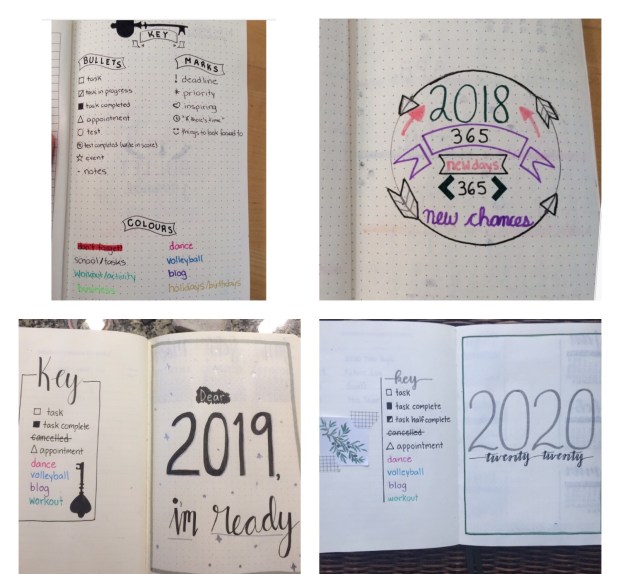
Key/Title Page

I always start with a key and a title page at the front of my journal. The key includes the different bullets and colours I’ll be using to record tasks and events throughout the year. I don’t usually reference it too much because I have it memorised, but it’s still good to have. As you can see, my first year journaling I made my key pretty complicated. I’m going to tell you right now that there’s no way you’re going to pull out a stencil or draw a little symbol every time you write something down. Especially in school! Keep your key simple with a few colours and bullet shapes, and you can always tweak it later on. As for the title page, I just have fun with it every year;)) Sometimes I throw in a quote, and other times I just keep it super simple. Anything goes!

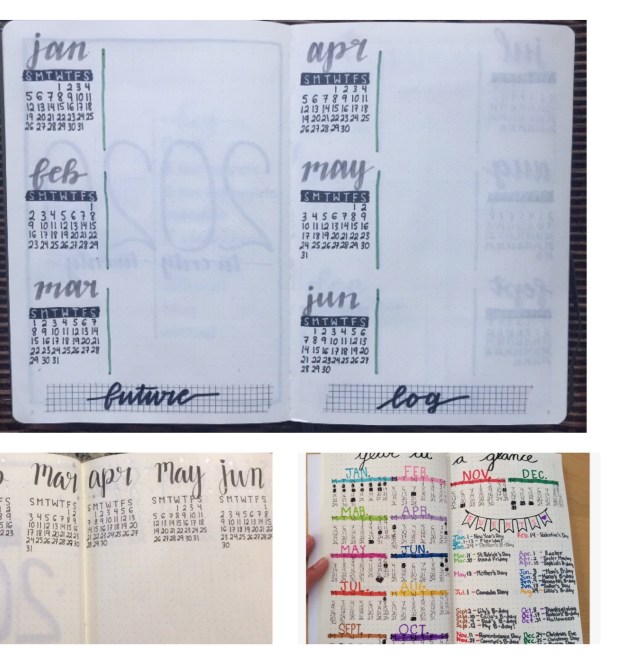
Future Log

This is one of the most important features of my journal! It’s where I record all the events that are happening throughout the year, like birthdays, big exams, and sports tournaments. I don’t write that I have volleyball practice every Thursday at 8 in my future log, because it would fill up pretty quick. I save it for the big stuff that I need to know the dates of. I always write out a mini calendar for each month so I can see which dates fall on which days. Holidays are another thing that I write in here.

Goals

Something that I love having in my journal is a goals page. Here I write down the big things that I want to accomplish that year. In 2019 and 2020 I have a “this year” section, with things that I want to do during the year in there. A goals page is definitely super important, because it allows you to revisit your goals often, and filling in that box when you accomplish something feels great! Remember, a goal that isn’t written down is just a dream.

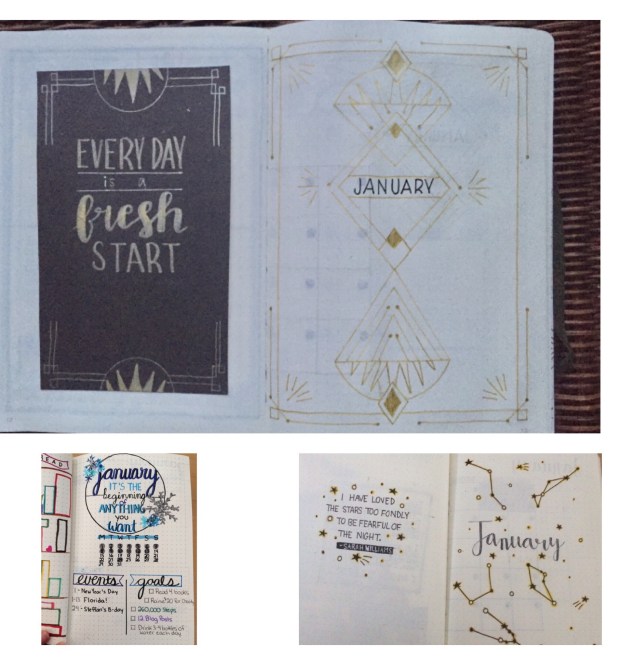
Monthly Title Page

These are some of my favourite pages to draw, because I get to be really creative with how I present my theme. I choose a different theme for every month in my journal to keep things interesting. Most of my title pages have the name of the month on one side, and a quote on the other.

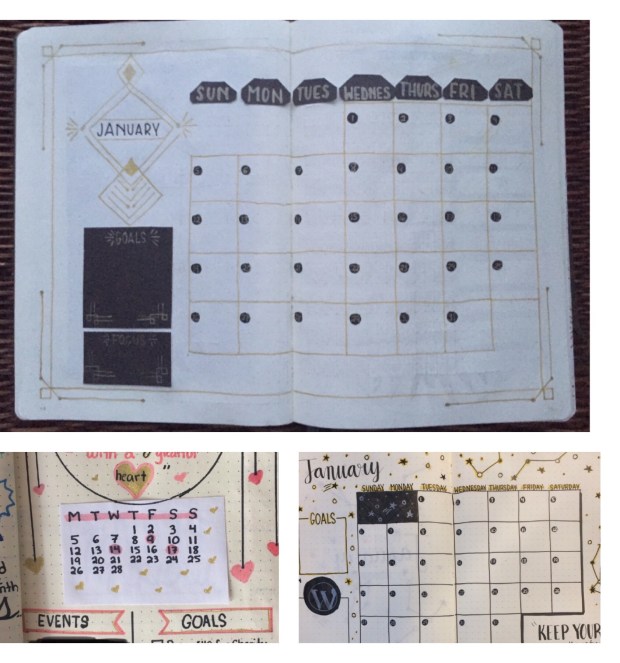
Monthly Calendar

In my monthly calendar, I write transfer over all of the events happening that month from my future log, and also include sports practices and smaller things that are happening. This helps me get a clear view of exactly what my month looks like. Plus I make space for goals, and sometimes a blog tracker or monthly focus.

Trackers

One thing that I’ve stuck with throughout my three years bullet journaling is tracking my habits, mood, and things I’m grateful for. I find that it really helps me stay motivated to get things done, and figure out why I’m feeling the way I am. I love my gratitude logs because they force me to find one positive thing about my day, even if it wasn’t very good.

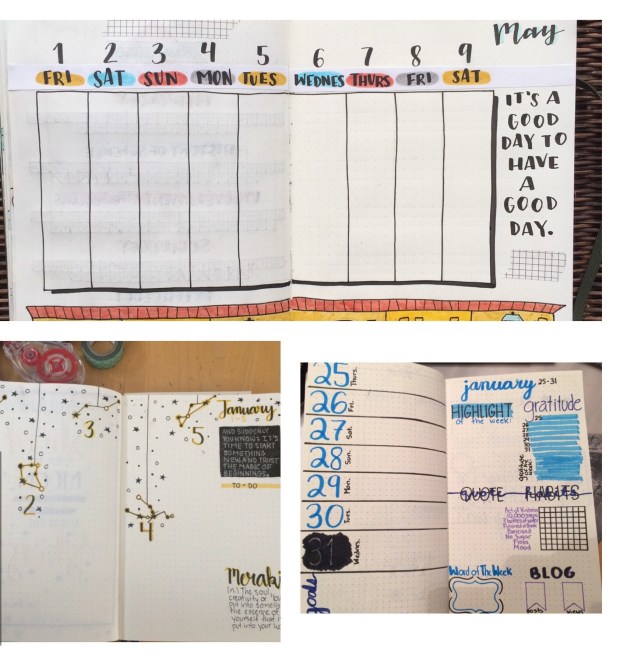
Weekly Spread

In my weekly spreads, I always have a space for each day, the name of the month, and maybe a quote or to-do list. This is where I go into the most detail with tasks and events. Lately I’ve been writing kind of a checklist for each day, so that I see what I need to get done. Weekly spreads help you to plan out your week, and you can get super creative with them!

Those are the parts of my bullet journal that I use most often! Hopefully you learned a little about the system!

Yours Truly,

Olivia

Nutty Granola

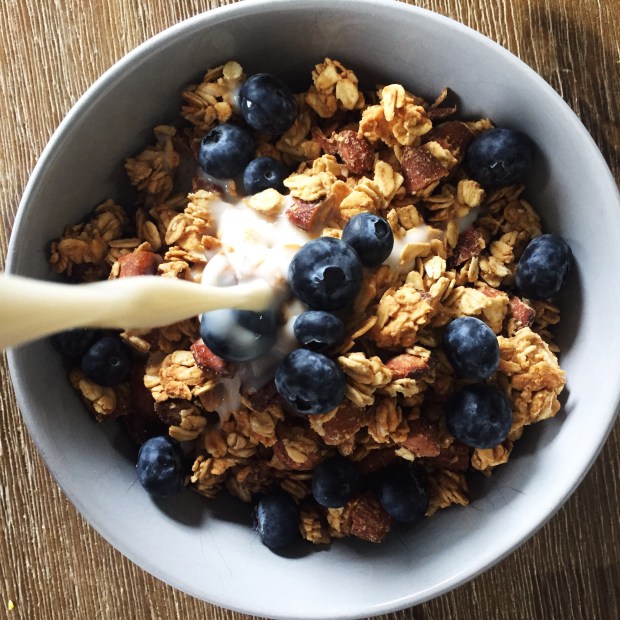
Hey guys! I have another granola recipe for you today because as you know, granola is one of my true loves. This one is actually really simple, it only uses one…two…three…four ingredients! Just had to count em up in my head there. Plus you don’t need any oil, unless you count peanut butter as an oil. I count it as spreadable gold.

There are also loooots of nuts in this granola, because who doesn’t love a nutty granola? I used almonds and pecans from a jar of mixed nuts. Why not use all of the mixed nuts, you ask? BECAUSE I”M ALLERGIC TO CASHEWS AND PISTACHIOS AND I’M REALLY MAD ABOUT IT! They make my mouth all itchy which is really inconvenient, because like every vegan cheesecake or creamy pasta sauce recipe ever has cashews in it. (Except for my Creamy Mushroom and Hummus Pasta which is an awesome alternative for my fellow cashew allergen people). But anyways, I love me some almonds and pecans so it’s all good. I know you might be running short on supplies right now, so if you absolutely positively cannot get your hands on almonds and pecans, you can use other nuts or even some seeds if you’re super desperate. I’m sorry, but nuts are just superior to seeds. Like would you rather have some peanut butter or like, pumpkin seed butter? I’ve never actually had pumpkin seed butter but based on my experience with peanut butter I’m going to say that it’s better.

Back to the granola. It’s sweet and nutty and crunchy, and you’ve also got some nice big clusters in there. If you’re not using salted nut butter, you could top it off with a little sea salt at the end for an extra hit of perfection. I will definitely be making this recipe again!

Nutty Granola

Serves: 3-4

Total Time: 25 minutes

Ingredients:

  • 2 1/2 cups rolled oats
  • 3/4 cup roughly chopped almonds and pecans (you still want some nice chunks in there)
  • 1/4 cup smooth natural peanut butter
  • 1/4 cup pure maple syrup

Directions:

  1. Preheat your oven to 375 degrees Fahrenheit.
  2. Mix together the nuts and oats in a large bowl. Set aside.
  3. In a small bowl, add in the peanut butter and maple syrup and microwave for about 30-45 seconds, until the peanut butter is nice and melty. Mix together until smooth.
  4. Add the maple syrup and peanut butter mixture into the oats and nuts and stir until everything is evenly coated. Spread the granola out onto a parchment lined baking sheet and bake for about 10 minutes.
  5. Remove the granola from the oven and give it a little stir, trying not to break up any clusters that are forming (because lets be honest, those are the best part). Return the pan to the oven and bake for another 5-8 minutes, until the granola is golden brown.
  6. Take out the granola, let cool and enjoy!

Hope you enjoy this nutty granola! See you soon;))

Yours Truly,

MyDayIsBooked;))

The ULTIMATE Guide To Roasting Veggies

Hey guys! Roasted veggies are one of my favourite things to eat, and my go to side dish. They get so caramelized and delicious in the oven and just taste AMAZING! I’ve posted a lot of recipes that feature roasted veggies as well, and I thought that it was high time to post an ULTIMATE guide to making these babies. They’re very simple and straight forward, but this post will help you get the perfect roasting time and know exactly what to look for when your veg comes out of the oven.

I’d have to say that my favourite veggie to roast is sweet potato, but I also love a good roasted cauliflower, onion, beet, carrot, or chickpea. The possibilities are endless! I’ll categorize the veggies that I’m writing about into groups like root vegetables and cruciferous vegetables (your vocab word of the day- veggies like broccoli and cauliflower), so that if there is a veggie I’ve missed you can roast it the same way as the other veggies in its family. Let’s get started!

First of all, I almost always roast my veggies at 400 degrees Fahrenheit. It’s high enough to cook the veggies quickly and get some nice caremelization going, but not so high that you’ll burn them to a crisp. Some kind of oil is also good for roasting, so I usually toss my veg in about a tablespoon or two of olive oil, enough to lightly coat them, and some salt and pepper before throwing them on a parchment lined baking sheet in the oven. You can also get creative with other spice combos! Okay, now that you know the roasting basics, you can scroll on down and I’ll let you know how to prepare each vegetable and how long to roast it for. When reading this next part, keep in mid that soft means easily pierce-able with a fork, but not mushy. No one likes mushy vegetables.

Root Vegetables

Sweet Potatoes (had to start with my fave): Wash your potato well, or peel it. Dice into cubes about an couple centimetres wide. Roast for about 30-35 minutes, until the sweet potatoes are soft and going slightly dark around the edges. (ps I don’t do a lot of normal potato roasting, but I can assume it would be the same procedure).

Carrots: Peel the carrots. Cut into sticks about five centimetres long and a centimetre wide. Roast for about 25-30 minutes, until soft and slightly caremelized.

Beets: Peel the beets. Dice into cubes that are two centimetres wide and roast for 30-35 minutes, until soft.

Onion: Peel the onion. Cut the onion in half, then into think slices, without separating the layers. Roast for about 20 minutes, until they’re soft and slightly brown.

Garlic (great for soups and dips!): Wrap a whole garlic clove in some tinfoil (I don’t use oil for this one) and roast for 15-20 minutes. Let the tinfoil cool slightly, then unwrap the little packet and remove the garlic cloves from their skins.

Cruciferous Vegetables:

Cauliflower: Wash the cauliflower well and cut it into florets a few centimetres high and a couple wide. Roast them for 20-25 minutes, until they’re tender and going brown.

Broccoli: Can be roasted the same way as cauliflower.

Brussels Sprouts: Remove some of the outer leaves and cut the brussels sprouts in half. Roast for 25-30 minutes, until soft and going brown.

Red Cabbage: Wash the cabbage and cut into lengthwise into cross sections about a centimetre thick. Roast for 25-30 minutes, until soft.

Kale: Chop width-wise into two centimetre long pieces and roast for 15-20 minutes, until crisp.

Squashes:

Zucchini: Wash and slice into circles about a centimetre think. Roast for 20 minutes, until soft and browning.

Butternut: Peel and cut into two centimetre wide cubes. Roast for 30-30 minutes, until soft and going golden.

Eggplant: Wash and cut into one centimetre thick cross sections. Roast for 20-25 minutes, until soft and going golden brown.

Other (aka I don’t know where these go)

Cherry Tomatoes: Wash and roast for 10-15 minutes, until very soft and getting slightly charred.

Tomatoes: Wash and cut into quarters. Roast for 15-20 minutes, until slightly charred.

Peppers: Wash, remove the stems and cut into chunks a few centimetres wide. Roast for 20 minutes, until soft.

Asparagus: Wash and cut off the very bottoms of the stems and any mushy parts. Roast for about 20-25 minutes, until fork tender but still a bit firm. The one vegetable that I would most hate to have mushy is asparagus!

Snap Peas: Wash and roast for 15-20 minutes, until soft.

Mushrooms: Apparently washing mushrooms make them absorb water that will come out when cooking them, so wiping your mushrooms with a paper towel might be a better cleaning method. You can slice the mushrooms and roast them for 15-20 minutes, or leave them whole and roast for 20-25 minutes. Either way, the mushrooms should be soft when done.

Chickpeas (from the can): Drain and rinse the chickpeas, then roast for 20 minutes, until crispy.

And there you have it! Talking about these veggies makes me want some:) If you like roasting any other kinds of veggies, let me know so I can try them out!

Yours Truly,

Olivia;)

Loaded Maple Balsamic Salad

How’s it going guys? It’s starting to feel like summer vacation because the weather is finally warming up! I’m starting to establish some rhythm and being more productive, so that’s a plus. These posts are keeping me busy and thinking!

Sooooo I heard that lots of people don’t like salads. What’s up with that? I don’t know what kind of salads that they’re eating, but in my world, salads have hot veggies, cold veggies, protein, mashed avocado, and SICK dressings. Making salads is actually so much fun because you can play around with flavour combos and pretty much add whatever you want. Today I’m sharing the recipe for this Loaded Maple Balsamic Salad. And before you ask, yes, it is VERY loaded. You’ve got sauteed peppers and golden brown butternut squash, corn, carrots, cucs, spinach, avo, hemp hearts, and an awesome maple balsamic dressing. Is it even physically possible not to like that combo? I think not. Go check out the recipe!

Loaded Maple Balsamic Salad

Serves: 1 very hungry person

Total Time: 20 minutes

Ingredients:

For the Salad:

  • A handful of baby spinach
  • 1 tbsp olive oil
  • Half a bell pepper, thinly sliced
  • 1/2 cup cooked corn (I used frozen)
  • 3/4 cup frozen butternut squash chunks (If you don’t have these you can use roasted squash or sweet potato, and skip the steps related to the frozen squash)
  • Salt and pepper to taste
  • 1/4 of a large cucumber, diced
  • 1/2 a large carrot, shredded
  • 1/2 an avocado, mashed
  • A sprinkle of hemp hearts

For the Maple Balsamic Dressing:

  • 1 tbsp olive oil
  • 1 tbsp balsamic vinegar
  • 1/2 tsp dried rosemary
  • 1/2 tsp maple syrup
  • Salt and pepper to taste

Directions:

  1. Whisk the dressing ingredients in a bowl and set aside.
  2. Heat the olive oil in a small pan over medium heat, and add in the peppers to saute.
  3. While the peppers are cooking, bring some water to boil in a small pot and add in the frozen butternut squash chunks. Cook them for about 2 minutes, then drain and add them to the pan with the peppers.
  4. Cook the squash and the peppers until they’re soft and have some browning going on on the outside, about 6 minutes. Then remove from the heat and season with salt and pepper.
  5. In a large bowl, arrange the spinach, peppers and squash, carrots, cucumber, and corn. Place the mashed avocado in the centre, and top with the hemp hearts and maple balsamic dressing.
  6. Enjoy!!

I hope this salad changes your mind about salads. It’s the salad to end all salad discrimination!

Yours Truly,

Olivia;))